







1
Secondary infertility:
What is it and can it be treated

Your first pregnancy may have been easy to achieve and completely natural. But if you have been trying for some time to give your child a sibling and have not succeeded, you and your partner may be facing a diagnosis of secondary infertility.
Secondary infertility is an increasingly common situation that affects many couples. At Equipo Juana Crespo, we have the technology and experience needed to help you fulfil your desire to become parents again.
This type of infertility refers to a couple’s inability to achieve pregnancy after one year of regular unprotected intercourse. In cases of secondary infertility, the objective is to determine—through a range of tests—the problem preventing pregnancy, and to establish a personalised strategy to address and resolve it.
Your first pregnancy may have been easy to achieve and completely natural. But if you have been trying for some time to give your child a sibling and have not succeeded, you and your partner may be facing a diagnosis of secondary infertility.
Secondary infertility is an increasingly common situation that affects many couples. At Equipo Juana Crespo, we have the technology and experience needed to help you fulfil your desire to become parents again.
This type of infertility refers to a couple’s inability to achieve pregnancy after one year of regular unprotected intercourse. In cases of secondary infertility, the objective is to determine—through a range of tests—the problem preventing pregnancy, and to establish a personalised strategy to address and resolve it.
2
Secondary infertility:
causes and experiences

The causes of secondary infertility can be varied. To identify them, it is essential to examine both members of the couple. As with primary infertility—when a first full-term pregnancy cannot be achieved—it is necessary to examine both partners in order to determine the possible causes. Here we may encounter a wide range of potential issues, affecting either the woman or the man.
Some of the most common causes include:
- Male fertility disorders: A decrease in semen quality or quantity, problems in the genital tract, or harmful habits such as smoking and alcohol consumption.
- Endometriosis and other ovulatory disorders: This disease is progressive and may lead to the formation of scar tissue and adhesions, chronic inflammation or, in severe cases, a reduction in ovarian reserve. Because it is progressive, it may be present in a mild form during the first pregnancy but later develop into secondary infertility. This can also occur with Polycystic Ovary Syndrome (PCOS), hyperprolactinaemia or thyroid disorders.
- Effects of the first pregnancy and childbirth: Obstetric complications or postpartum infections may affect fertility. It is possible that during a previous delivery a caesarean section was required, which increases the risk of adhesions obstructing the fallopian tubes, or uterine alterations resulting from the surgical procedure.
- Lifestyle and emotional factors: Stress, being overweight or underweight, or unhealthy habits can influence fertility.
- Age, the main factor: Aside from all the possible causes of secondary infertility, there is one undeniable factor: the mother’s age. It is obvious that you were younger during your first pregnancy. As the years pass, the chances of pregnancy decrease significantly, especially after the age of 35. This is mainly because ovarian reserve declines, along with the quality of the eggs.
The causes of secondary infertility can be varied. To identify them, it is essential to examine both members of the couple. As with primary infertility—when a first full-term pregnancy cannot be achieved—it is necessary to examine both partners in order to determine the possible causes. Here we may encounter a wide range of potential issues, affecting either the woman or the man.
Some of the most common causes include:
- Male fertility disorders: A decrease in semen quality or quantity, problems in the genital tract, or harmful habits such as smoking and alcohol consumption.
- Endometriosis and other ovulatory disorders: This disease is progressive and may lead to the formation of scar tissue and adhesions, chronic inflammation or, in severe cases, a reduction in ovarian reserve. Because it is progressive, it may be present in a mild form during the first pregnancy but later develop into secondary infertility. This can also occur with Polycystic Ovary Syndrome (PCOS), hyperprolactinaemia or thyroid disorders.
- Effects of the first pregnancy and childbirth: Obstetric complications or postpartum infections may affect fertility. It is possible that during a previous delivery a caesarean section was required, which increases the risk of adhesions obstructing the fallopian tubes, or uterine alterations resulting from the surgical procedure.
- Lifestyle and emotional factors: Stress, being overweight or underweight, or unhealthy habits can influence fertility.
- Age, the main factor: Aside from all the possible causes of secondary infertility, there is one undeniable factor: the mother’s age. It is obvious that you were younger during your first pregnancy. As the years pass, the chances of pregnancy decrease significantly, especially after the age of 35. This is mainly because ovarian reserve declines, along with the quality of the eggs.
3
Solutions for secondary infertility
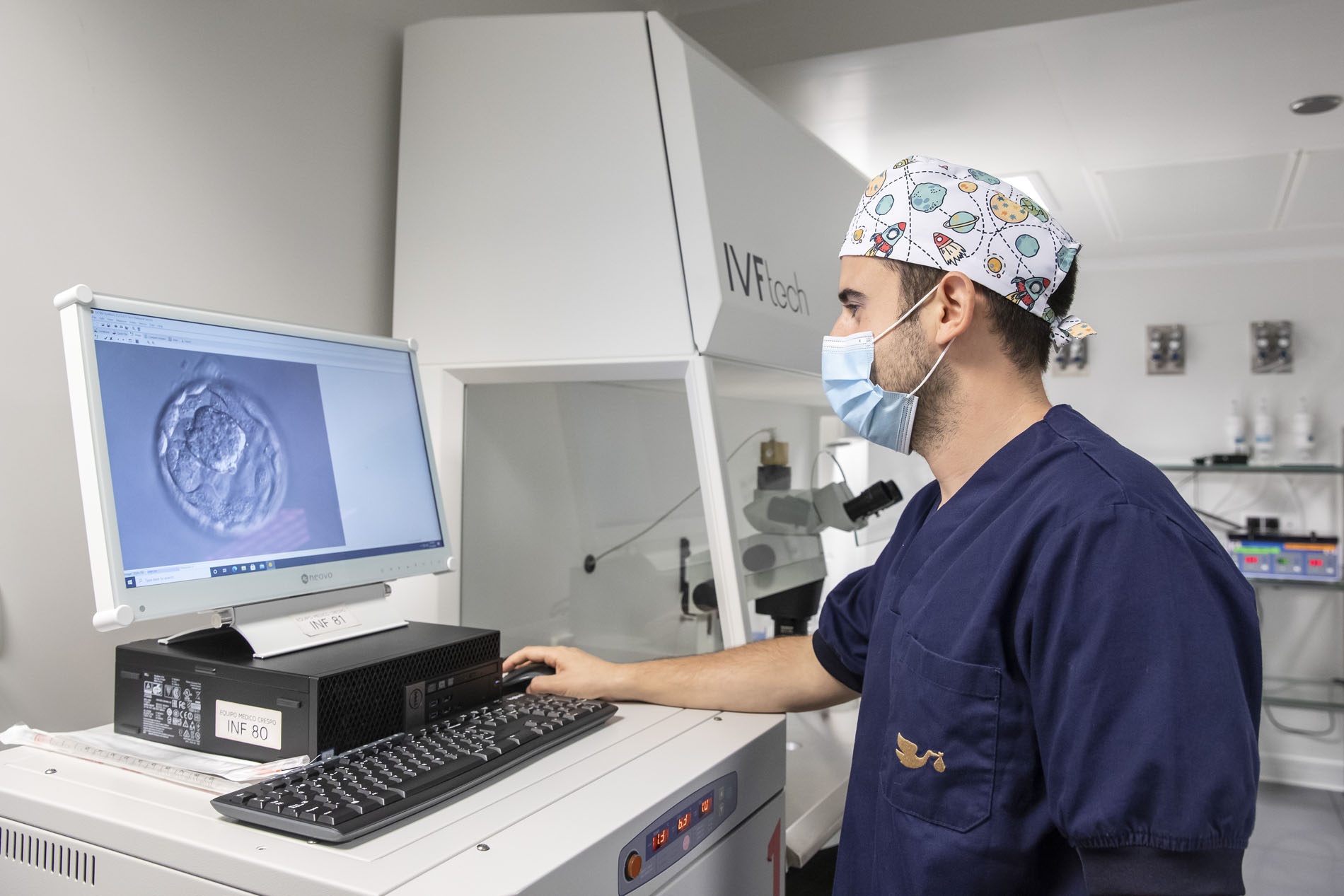
At Equipo Juana Crespo, we carry out a comprehensive assessment of the couple to find the best solution. Each patient is unique and deserves a personalised treatment.
In Vitro Fertilisation (IVF)
Revitalize
Reproductive surgery
4
Why Equipo Juana Crespo?
1. We will accompany you throughout the entire process
At Equipo Juana Crespo, we want you to feel supported from the very beginning. We have extensive experience helping couples who, after having a child naturally, encounter difficulties conceiving again. We understand that this situation can be disconcerting and raise many questions, especially when the previous experience was different. That's why it's essential to have a team that understands your situation and supports you with compassion, expertise, and sensitivity.
2. Highly personalized endometrial preparation
Preparing the uterus is essential for achieving pregnancy, and any deficiency in this process can lead to implantation failure and early miscarriage. Our team works to optimize uterine conditions to ensure that both the endometrium, the receptive layer, and all other components involved in placentation are in the most suitable state to receive an embryo.
3. We have the best results in High Complexity fertility treatments
A dedicated team focused on achieving the best results, our commitment is to help you build a family, whatever your circumstances. This requires a high level of specialization in all areas, from consultations and laboratory work to surgery.
FAQS
If my first pregnancy was natural and without difficulties, why can't I have it now?
Fertility can change over time, even if the first pregnancy was easy. Age, declining ovarian reserve, hormonal changes, semen abnormalities, or minor gynecological complications can arise after the first childbirth and make it difficult to conceive again. Therefore, it is important to conduct a comprehensive evaluation of both partners during their first visit to our clinic.
When should we consult a specialist if we are trying for a second pregnancy?
If you've been trying to conceive for about a year without success—or six months if the woman is over 40—it's advisable to consult a fertility specialist. Seeking an early diagnosis allows for the timely detection of potential causes and the application of the most appropriate treatment, preventing further missed opportunities.
If we don't want to have another child yet, can we plan our fertility for later?
If you'd like to expand your family in the future, but not in the short term, you might consider fertility preservation options, such as egg vitrification. Planning ahead helps improve your chances of having children and allows you to make decisions with greater peace of mind.


